
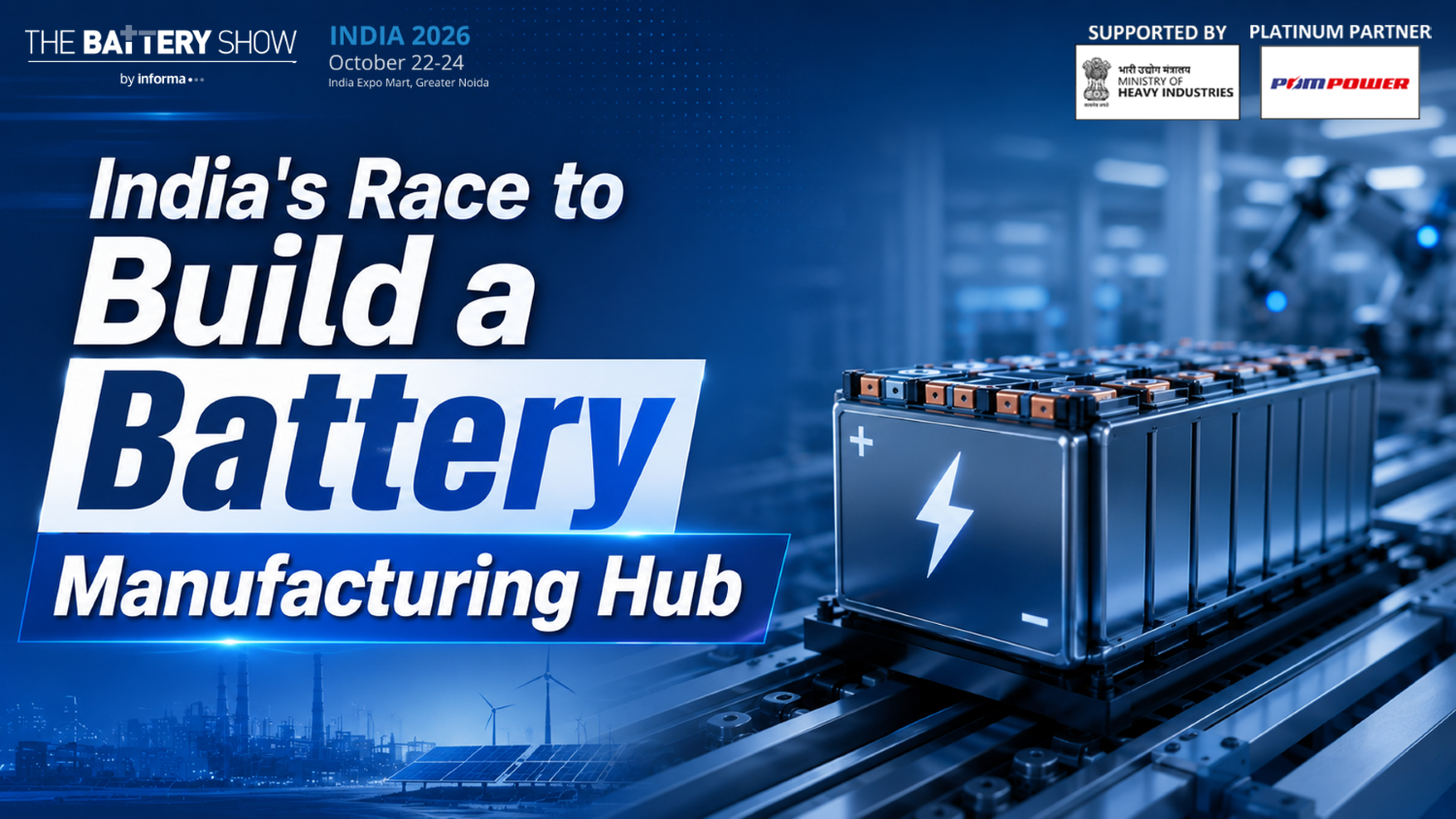
Battery Manufacturing in India: How Policy Support Is Shaping the Next Phase of Gigafactory Growth
India's battery manufacturing industry is at a critical turning point.
As electric vehicles, renewable energy projects, and battery storage systems continue to grow, the need for domestic battery production has become a national priority. Rather than relying heavily on imports, India is working to build a self-reliant battery ecosystem that supports long-term industrial growth.
In 2026, government policies are playing a major role in shaping the next phase of gigafactory development across the country.
Why Domestic Battery Manufacturing Matters
Batteries sit at the heart of multiple fast-growing industries.
Electric vehicles depend on them. Energy storage projects require them. Renewable energy integration increasingly relies on them.
A strong domestic manufacturing base can help reduce import dependence, improve supply chain resilience, attract investment, create jobs, and strengthen India's position in the global battery value chain.
This is why battery manufacturing has become a strategic priority for the country.
The Role of the ACC PLI Scheme
One of the most significant policy initiatives supporting battery manufacturing is the Advanced Chemistry Cell (ACC) Production Linked Incentive (PLI) Scheme.
Launched with an outlay of ₹18,100 crore, the scheme aims to establish 50 GWh of domestic battery manufacturing capacity. The objective is to encourage companies to build large-scale facilities capable of producing advanced battery cells within India.
The scheme has attracted interest from major companies looking to invest in battery manufacturing and gigafactory projects.
Progress So Far
While industry enthusiasm remains strong, implementation has taken longer than expected.
According to recent industry reports, only about 1.4 GWh of the targeted 50 GWh capacity had been commissioned by late 2025. However, there are encouraging signs for future growth. Land acquisition has now been completed for 40 GWh of the awarded manufacturing capacity, creating a strong foundation for upcoming projects.
This highlights an important reality: building gigafactories is a long-term process involving land acquisition, equipment procurement, supply chain development, workforce training, and technology integration.
Investment Activity Continues
Despite delays, investments continue to flow into the sector.
Government disclosures indicate that companies awarded capacity under the PLI scheme have committed thousands of crores of investment toward domestic battery manufacturing. The projects span multiple states and are expected to support both EV and stationary energy storage markets.
As energy storage demand grows alongside electric mobility, manufacturers see significant long-term opportunities in the Indian market.
Beyond Incentives: Building an Ecosystem
Policy support today extends beyond direct incentives.
The government is also focusing on:
- Developing local supply chains.
- Encouraging domestic value addition.
- Reducing dependence on imported battery components.
- Supporting battery recycling and circular economy initiatives.
- Promoting energy storage adoption that creates downstream demand for batteries.
This broader ecosystem approach is essential because gigafactories cannot succeed in isolation. They require suppliers, skilled talent, infrastructure, technology partners, and a strong customer base.
Growing Demand Creates Confidence
One reason manufacturers remain optimistic is the scale of future demand.
India's growing EV market, expanding renewable energy sector, and increasing battery storage requirements are expected to drive substantial battery consumption over the next decade.
The government's push for large-scale BESS deployment is also expected to create additional demand for domestically manufactured battery cells and packs.
For manufacturers, this creates a strong business case for long-term investments.
Challenges Still Remain
The industry is not without challenges.
Companies continue to navigate issues such as technology access, raw material sourcing, global competition, and project execution timelines. Industry reports have also highlighted implementation bottlenecks that have slowed capacity commissioning under the PLI scheme.
However, these challenges are increasingly being viewed as growing pains rather than barriers to growth.
The Road Ahead
India's battery manufacturing sector is still in the early stages of its development journey, but the direction is clear.
Policy support, rising demand, infrastructure development, and increasing industry participation are laying the groundwork for the next wave of
gigafactory growth. The coming years will likely determine how quickly India can transform from a major battery consumer into a significant battery manufacturing hub.
For industry professionals, staying connected with emerging technologies, policy developments, manufacturing trends, and supply chain innovations will be essential.
The Battery Show India, scheduled from 22-24 October 2026 at India Expo Centre & Mart, Greater Noida, will bring together battery manufacturers, technology providers, automotive leaders, energy storage companies, and policymakers under one roof. As India's battery ecosystem continues to expand, the event offers a platform to explore the innovations and partnerships shaping the future of battery manufacturing and gigafactory development.