
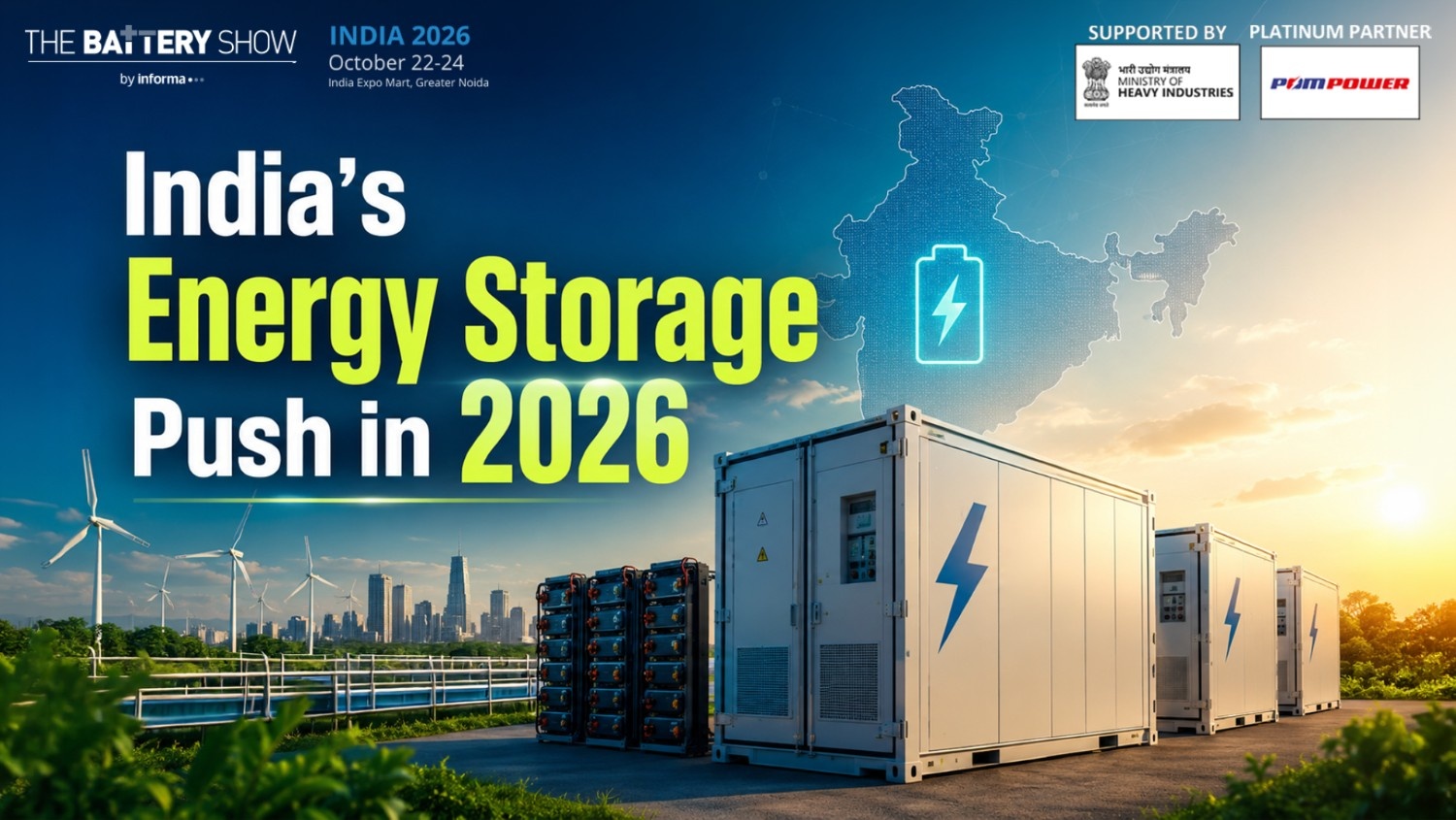
India's clean energy transition is entering a new phase. While solar and wind power capacity continue to expand rapidly, attention is now shifting toward a critical piece of the puzzle: energy storage.
Battery Energy Storage Systems (BESS) are becoming essential for ensuring that renewable energy can be used when it is needed, not just when it is generated. In 2026, government policies, funding support, and regulatory reforms are accelerating the deployment of battery storage across the country.
Why Energy Storage Matters
India has set ambitious renewable energy targets, but renewable power sources such as solar and wind are intermittent by nature. Solar plants generate electricity during the day, while demand often peaks in the evening. Wind generation can also fluctuate depending on weather conditions.
This is where battery energy storage comes in. BESS allows excess renewable energy to be stored and supplied back to the grid when demand rises. The result is a more stable and reliable power system.
As India adds more renewable capacity, storage is becoming less of an option and more of a necessity.
Government Support Is Growing
One of the biggest developments driving the energy storage sector has been the government's increased financial support.
To encourage large-scale deployment, the Ministry of Power approved an additional ?5,400 crore Viability Gap Funding (VGF) scheme for 30 GWh of battery energy storage capacity. This is in addition to the earlier VGF support of ?3,760 crore that is already helping implement 13.2 GWh of
storage projects. The new scheme is expected to attract investments worth approximately ?33,000 crore.
The goal is clear: reduce project costs, improve financial viability, and encourage faster adoption of storage technologies.
India's Storage Requirements Are Rising
According to estimates cited by the government, India will require significant energy storage capacity over the coming years to support renewable integration.
Recent projections indicate that the country could need more than 41 GW of battery energy storage capacity by 2029-30, alongside pumped storage projects, to maintain grid reliability while increasing renewable energy penetration.
This demand is creating opportunities for developers, battery manufacturers, utilities, EPC companies, and technology providers across the energy value chain.
Industry Momentum Is Picking Up
The policy push is already translating into market activity.
According to industry research, India added approximately 4.6 GWh of battery energy storage capacity during the first quarter of 2026 alone, representing a dramatic increase compared to previous quarters. The country's storage pipeline is also expanding rapidly, with multiple utility-scale projects under development.
Several state governments are also introducing regulations and frameworks to encourage storage deployment. For example, Rajasthan recently introduced dedicated BESS regulations aimed at improving renewable integration and grid reliability while enabling storage participation in electricity markets.
Grid Readiness Is Driving the Conversation
Interestingly, the focus is no longer only on adding renewable capacity.
In 2026, policymakers have increasingly emphasized grid readiness, transmission infrastructure, and energy storage deployment. Industry discussions have highlighted that renewable energy curtailment remains a challenge when transmission networks and storage systems are insufficient. Government ministries have therefore been reviewing ways to accelerate both transmission and battery storage deployment.
This marks an important shift in India's energy transition strategy. Building renewable projects alone is no longer enough. The entire energy ecosystem must be prepared to handle and distribute that power efficiently.
What This Means for the Industry
The rapid growth of BESS is creating opportunities across multiple sectors:
- Renewable energy developers integrating storage with solar and wind projects.
- Utilities seeking grid balancing solutions.
- Battery manufacturers expanding production capabilities.
- Technology providers offering advanced energy management systems.
- Investors looking at long-term infrastructure opportunities.
As policy support strengthens and project economics improve, battery storage is expected to become one of the fastest-growing segments within India's energy sector.
Looking Ahead
The year 2026 may be remembered as the period when energy storage moved from pilot projects to mainstream infrastructure.
With government incentives, rising renewable capacity, increasing demand for grid stability, and strong private sector participation, India's energy storage ecosystem is gaining momentum.
For professionals looking to understand the latest developments in battery technology, energy storage solutions, manufacturing, and policy trends, industry events are becoming increasingly important platforms for collaboration and knowledge sharing.
The Battery Show India, taking place from 22-24 October 2026 at India Expo Centre & Mart, Greater Noida, will bring together battery manufacturers, energy storage providers, technology innovators, policymakers, and industry leaders shaping the future of energy storage in India. As the sector continues to evolve, conversations around BESS deployment, manufacturing, and grid integration are expected to take center stage at the event.
Source Links:
Economic Times (₹5,400 Cr BESS Funding) | PIB (PRID: 2140223) | PIB (PRID: 2205959) | Times of India (Rajasthan BESS Guidelines) | Economic Times (India Adds 4.6 GWh Storage Capacity in Q1 2026)